
Meet the Client
The North Carolina Department of Environmental Quality (NCDEQ) protects the state’s natural resources and public health. Their Division of Water Resources safeguards drinking water and recreational waters across North Carolina. With construction projects multiplying statewide, the division handles over 1,300 water quality certification applications each year. These permits are required before any project can impact waterways or wetlands. The division also ensures wetland restoration matches what development destroys, protecting riparian buffers acre by acre.
Daily Detour: Three Weeks Lost to Paper
Picture this: a developer ready to break ground, waiting for a simple permit approval. The 13-page paper application sits in the mail for two weeks. Once it arrives, staff spend another full week just processing paperwork. Documents get lost between desks. Forms duplicated by mistake. No one knows which stage an application has reached. Staff can’t track what’s moving through the approval process.
Meanwhile, construction timelines slip further behind. The old process created bottlenecks at every turn. Paper applications piled up in different offices across the state. Staff wasted hours hunting down missing documents or fixing duplicate entries. Applicants are constantly called to ask about their status. The division needed applicants to stay compliant with both state and federal regulations, but the paper process made compliance harder, not easier.
Every delay meant another project on hold. Every lost document meant starting over. Every duplicate meant wasted staff time. The system wasn’t just slow. It was holding back economic development across North Carolina.
The Solution: One Form, Two Permits, Zero Paperwork
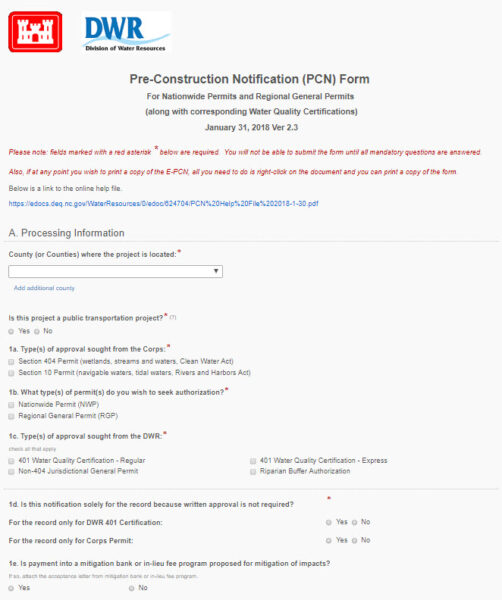
The Division of Water Resources partnered with MCCi to replace paper with intelligent automation. Now, applicants complete a single online form that applies for both state and federal permits simultaneously. The Laserfiche Forms system shows or hides fields based on what applicants enter. No more confusion. No more redundant questions. Just clear, guided data entry.
As a Laserfiche partner, MCCi brings specialized expertise in government compliance workflows. The team understands that state environmental agencies face unique challenges. Regulations shift. Staff turnover happens. Budget constraints limit resources. MCCi designs solutions that work within these realities. Their Laserfiche training programs ensure new staff members get up to speed quickly. Their support model provides responsive help when questions arise.
See it in Action
Get more good days done with Laserfiche’s complete toolset for securing documents, automating repetitive tasks, and meeting compliance requirements.
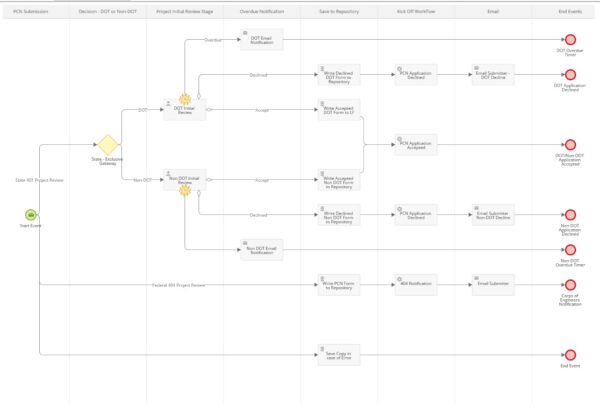
When someone submits an application, Laserfiche workflow takes over. The system automatically determines whether the application goes to the Department of Transportation or the U.S. Army Corps of Engineers. Then it routes the application for approval without any manual intervention. If three days pass without approval or denial, the system sends an automatic reminder to the supervisor. Every application gets stored in the repository, whether accepted or rejected. Nothing gets lost.
Staff members can track application status in real time. They change a document’s field value to “approved,” and Laserfiche training has prepared them to trigger the accepted application workflow instantly. The system stores form values as tokens for later use. It automatically searches for existing project folders. It generates URLs that open directly to folders, documents, or search results in the Web Client. Metadata gets added without manual data entry. Documents land in the right folders without staff intervention.
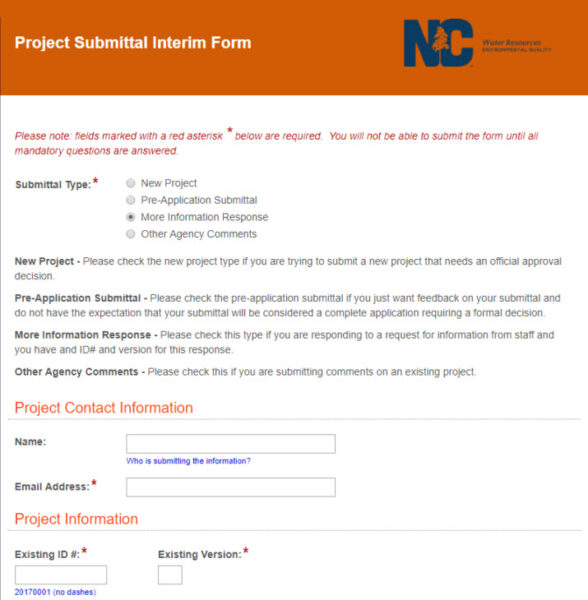
When additional information is needed, staff send a supplemental information form with the project number attached. Applicants only upload what’s missing instead of starting from scratch. The system links historical data and current applications together. This makes tracking development patterns simple. Staff can see cumulative impacts on any piece of land, not just individual projects.
Payment processing integrates directly into the workflow. When payment is required, applicants receive an email with a payment link and project identification details. They have 30 days to complete payment before it is automatically rejected. The system tracks payment status and updates application records accordingly.

The public portal transforms transparency. Any person with internet access can view records instantly. This matters especially when multiple contractors develop the same land. Agencies can verify total environmental impact instead of reviewing projects in isolation. The portal serves as protection against overdevelopment. Historical data stays accessible. Application statuses stay current. Public access happens 24/7 without staff involvement.
The Result: Three Weeks Became Three Days
Processing time dropped from three weeks to just days. Applications arrive instantly instead of sitting in mail for two weeks. Staff process them in hours instead of a full week. Developers get answers faster. Projects start sooner. Economic development accelerates across the state.
“Laserfiche has made our agency more responsive and accessible to the public by creating one location where our files are available to anyone with internet access at any time of day.”
Document tracking went from impossible to automatic. Staff know exactly where each application sits in the approval process. Nothing gets lost between offices. No duplicates waste time. Supervisors see bottlenecks before they become problems. The system sends automated reminders when approvals lag. Accountability improves at every level.
Public access changed completely. What used to require staff time and phone calls now happens instantly online. Citizens check application status without calling. Contractors verify permit requirements before submitting applications. Environmental groups monitor development impacts in real time. The portal provides transparency without creating extra work for staff.
Compliance got easier for everyone. Applicants understand requirements better because the digital form guides them through each step. Staff catch incomplete applications before processing begins. Federal and state coordination happens automatically. The single form approach eliminates duplicate data entry. Applicants appreciate the simplicity. Agencies appreciate the accuracy.
Resource protection improved because better data enables better decisions. The division can track cumulative impacts on specific wetlands. They can identify overdevelopment patterns early. Historical data stays accessible for analysis. Environmental protection gets stronger when information flows freely.
The transformation extended beyond the Division of Water Resources. Other state agencies see the possibilities. They ask about Laserfiche partners who understand government workflows. They want the same responsive support MCCi provides. They need training programs that work for diverse staff skill levels. Word spreads about what’s possible when you pair the right technology with the right implementation partner.
Staff morale shifted as frustration gave way to efficiency. Nobody wants to chase lost paperwork. Nobody enjoys explaining delays they can’t control. The new system lets staff focus on their real job: protecting North Carolina’s water resources. They review applications faster. They make better decisions. They serve the public more effectively.
Budget justification became easier. When leadership sees three-week timelines compress to days, investment makes sense. When the public portal reduces staff time spent answering status questions, value becomes obvious. When compliance improves and development accelerates simultaneously, everyone wins.